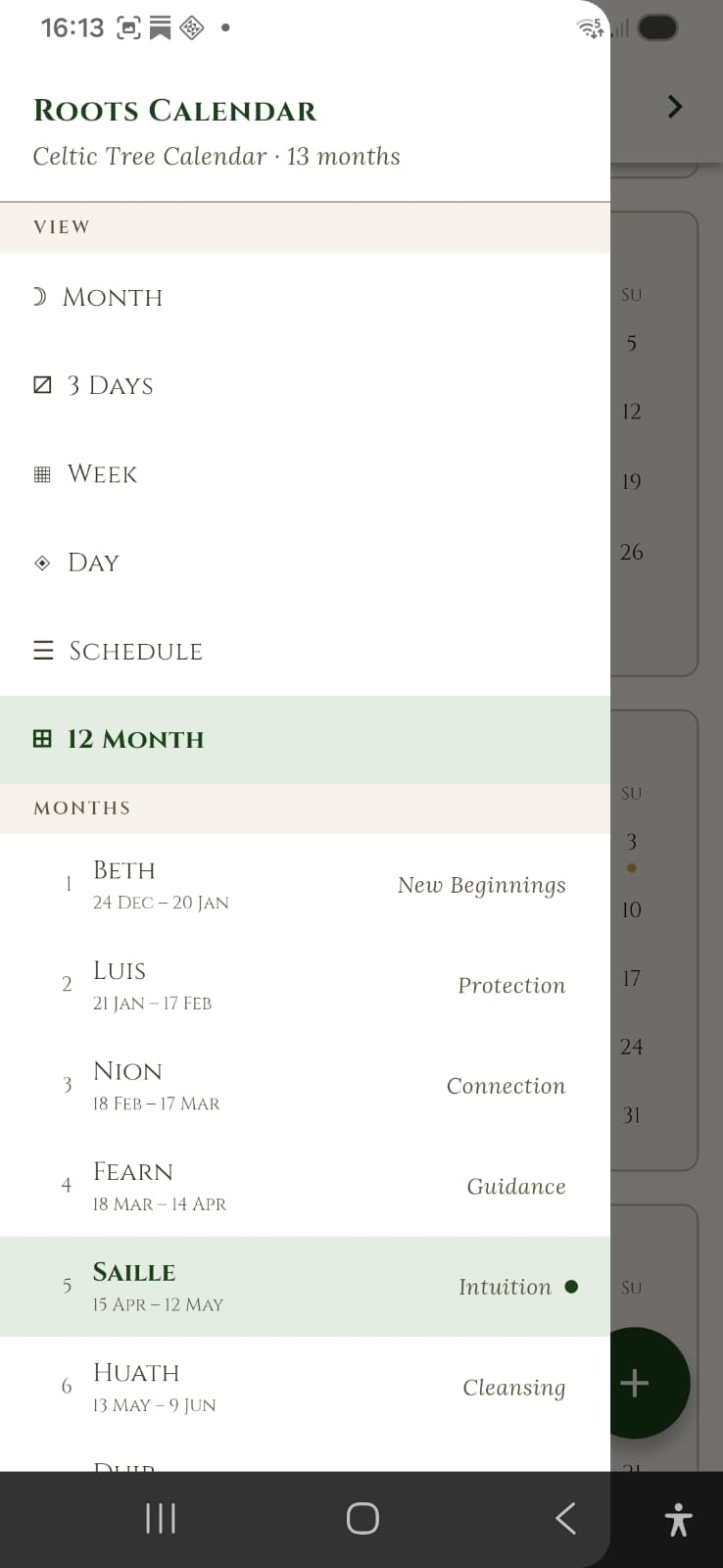
The Gregorian calendar is a political artifact. December means "tenth month" — it is the twelfth. October means "eighth" — it is the tenth. The original Roman calendar had ten months starting in March. Two more were inserted, the names were never updated, and nobody has questioned it in over two thousand years.
The months are unequal, the weeks drift, and the whole system exists because a committee of emperors and popes kept patching it.
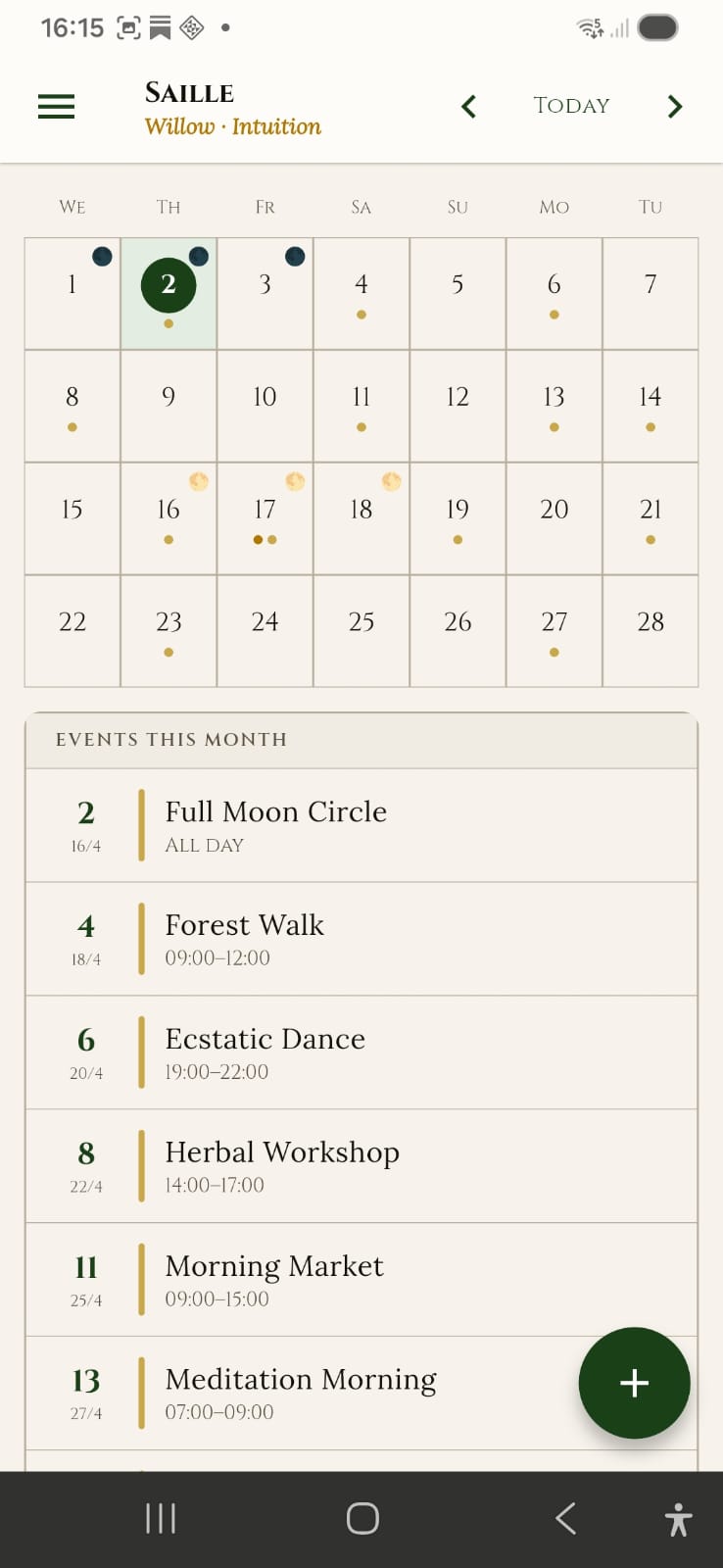
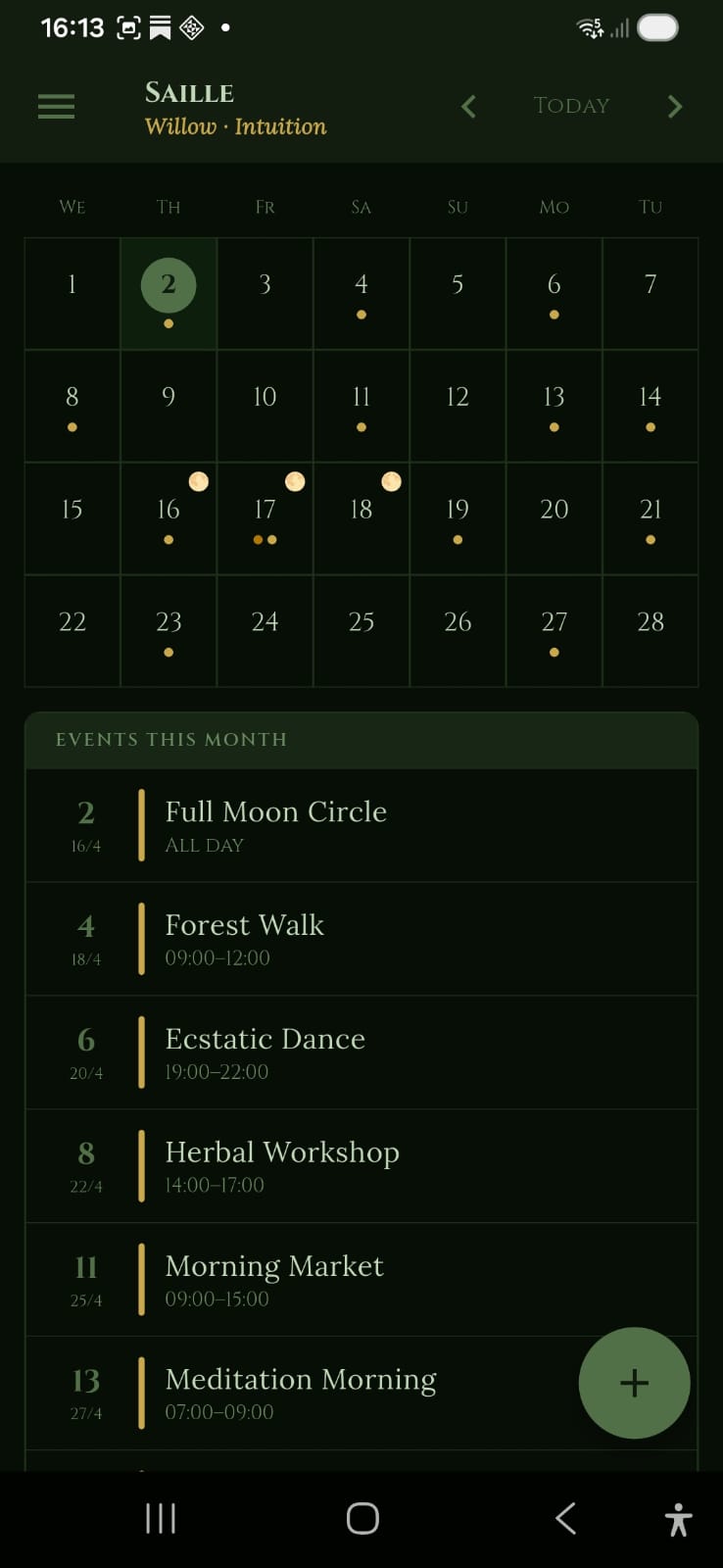
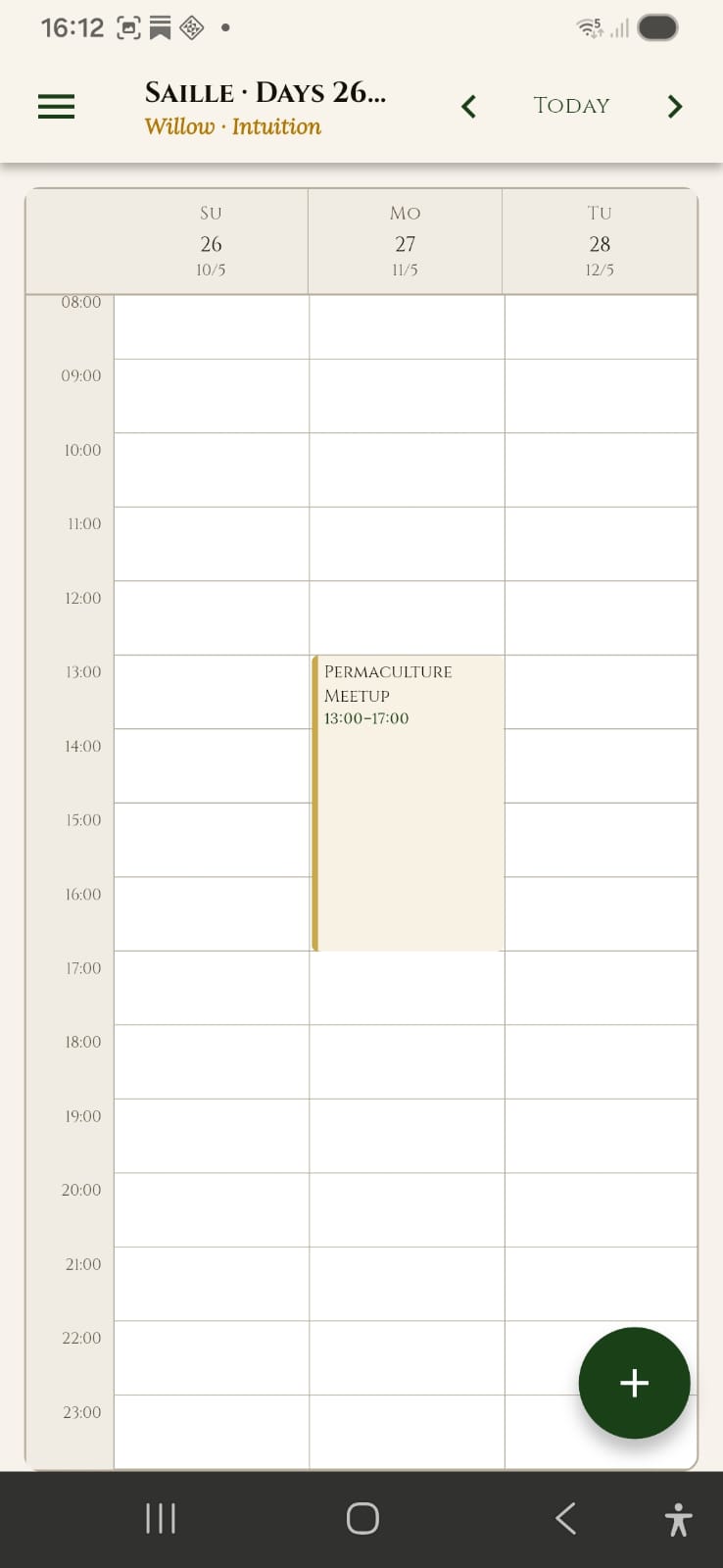
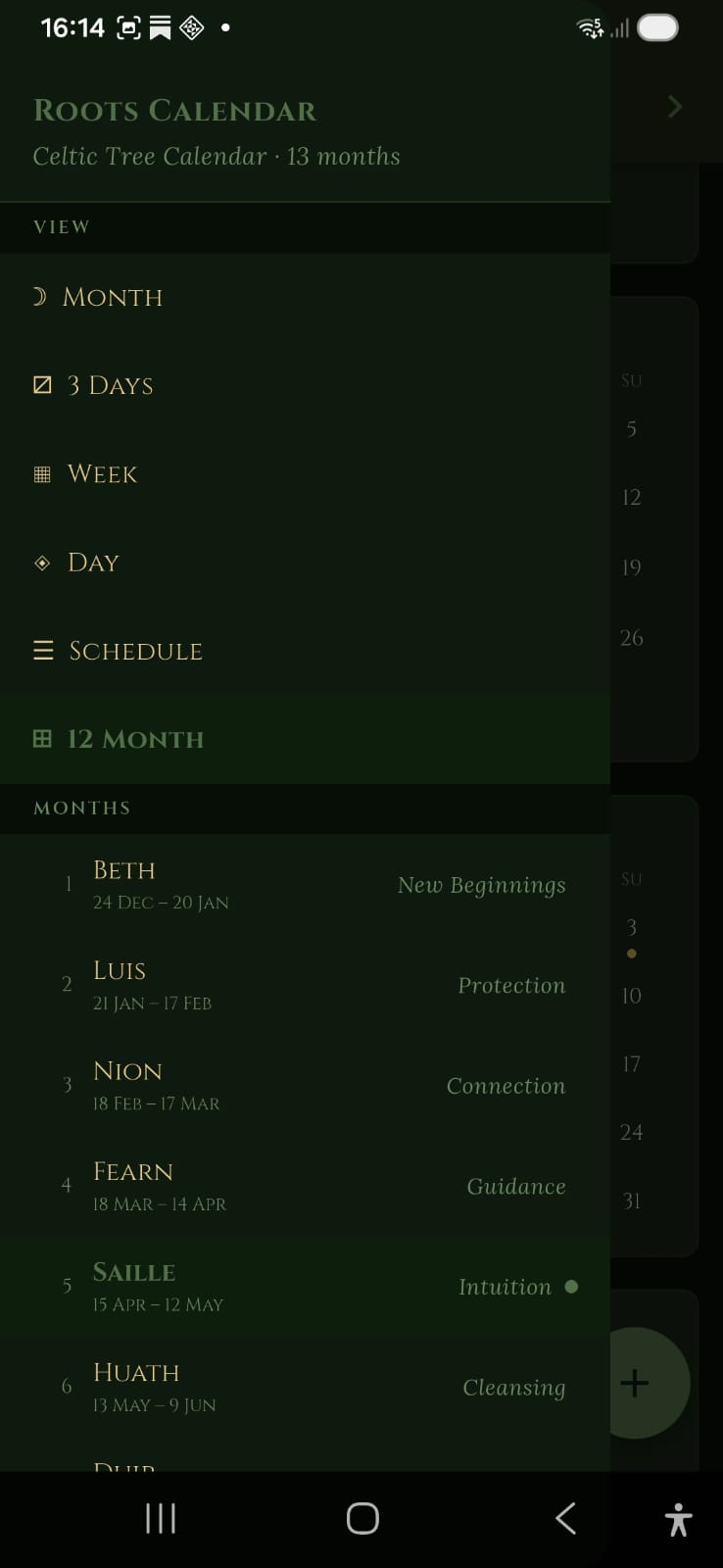
The Celtic Tree Calendar is different. Thirteen months. Twenty-eight days each. Every month is exactly four weeks, every week begins on the same day of the year, and each month is named for a sacred tree carrying its own teaching.


Roots Calendar started when I heard a podcast about the number 13 and why it got erased from our calendar. That sent me down a rabbit hole into Celtic culture, the Beth-Luis-Nion tree calendar, and eventually — as these things go — into a Flutter codebase at midnight.
The app is open-source, built in Flutter, and published under the GPL-3.0 license. It's a side project I'm genuinely proud of: something that blends a real historical system with careful, modern software craft.
Right now it's in closed beta on Android. iOS is on the roadmap. If you want to help test it and you have a Gmail address, that's all you need.
Roots Calendar is in closed testing on Android. Here's how it works:
Android only for now · Gmail required for Play Store beta access · No spam, ever.
A 13 month calendar divides the year into 13 equal months of 28 days each, totalling 364 days, with one or two extra days outside the monthly structure. The most well-known 13 month systems are the Celtic Tree Calendar (Beth-Luis-Nion) and the International Fixed Calendar. Because 13 × 28 = 364, every month is exactly four weeks — something the Gregorian calendar's unequal months can never achieve.
The Celtic Tree Calendar, also known as the Beth-Luis-Nion system, is an ancient 13 month calendar in which each month is named after a sacred tree and its associated Ogham character. The year begins on December 24th with Beth (Birch) and ends with Ruis (Elder) in mid-December, followed by a Year Day — a nameless day between the years. Each tree carries a teaching: Birch for new beginnings, Oak for strength, Willow for intuition, and so on.
The original Roman calendar had 10 months beginning in March — which is why September, October, November, and December still carry their Latin names for 7, 8, 9, and 10. Around 713 BC, King Numa Pompilius added January and February, shifting the count by two without renaming the others. The 12 month structure was later reformed by Julius Caesar and again by Pope Gregory XIII in 1582. The result is the unequal, historically patched system we still use today.
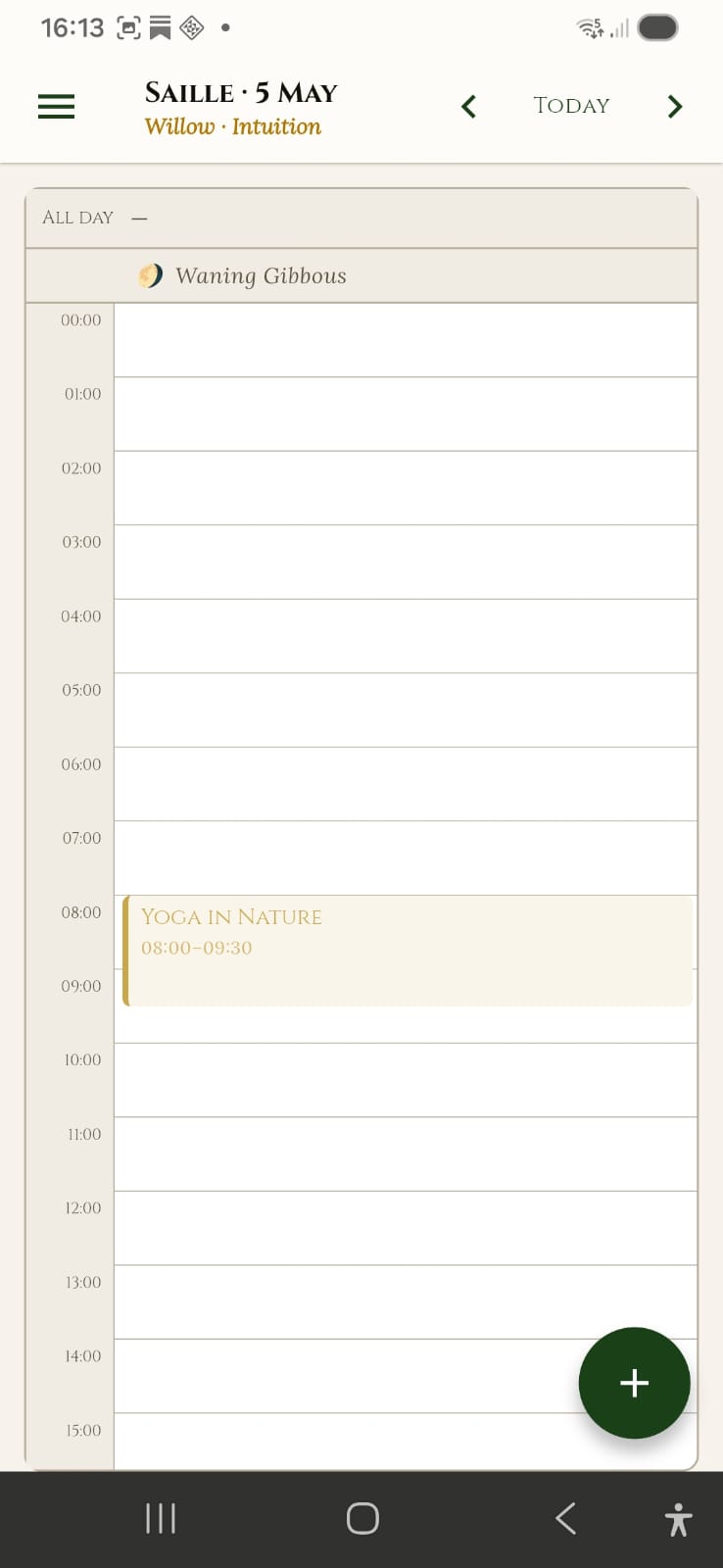
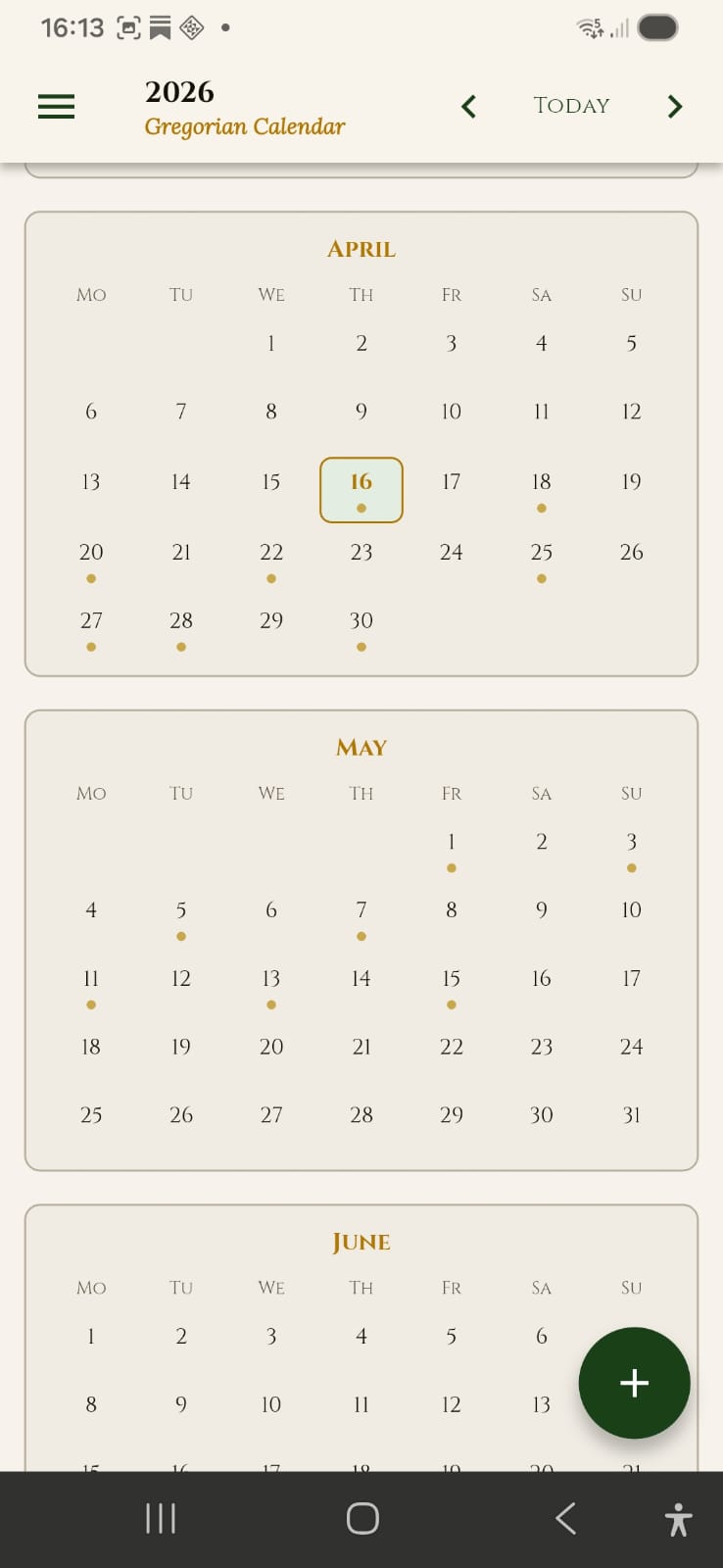
Yes — that's exactly how it's designed. Every day cell shows the Celtic date alongside the Gregorian date. You can sync with Google Calendar so your existing events appear in Celtic time, and any new events you create can be written back to Google Calendar. The app is a companion to your everyday calendar, not a replacement.
Yes. Roots Calendar is free and open-source (GPL-3.0). There are no ads, no subscription, and no account required. All your event data stays on your device.
Not yet — Android comes first. iOS is on the roadmap. If you're on iPhone and want to be notified when it launches, leave your email in the beta form above and mention iOS.